
Introduction:
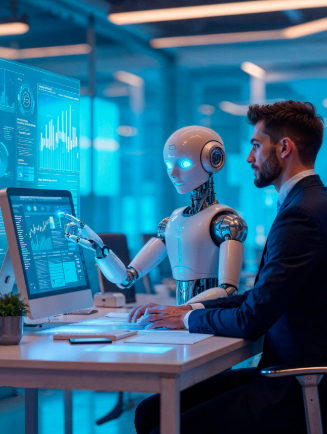
Across ultramodern enterprises, cybersecurity has become both a strategic precedence and a patient resourcing challenge. As menaces grow in volume and complication, associations struggle to secure and retain good professionals at the pace needed. In this environment, AI in cybersecurity staffing, workforce robotization, and smarter deployment of cyber talents are arising as critical regulators for erecting flexible security teams.
Addressing the Cyber Talent Shortage
The global lack of professed cybersecurity professionals continues to widen, affecting associations in every sector. Traditional hiring models — lengthy importunity cycles, homemade webbing, and siloed reclamation processes are no longer sufficient to keep up with fast-moving threat geographies. Enterprises need a further data-driven, technology-enabled approach to identify, attract, and retain technical cyber faculty without compromising on quality or speed.
How AI Enhances Cybersecurity Hiring
AI in cybersecurity staffing introduces intelligence and automation into the reclamation lifecycle. Machine literacy models can snappily parse large volumes of resumes, instruments, design histories, and assessment results to face campaigners whose proficiency align with defined part conditions and organizational culture. This reduces time-to-hire, improves matching delicacy, and helps alleviate moral bias in webbing and shortlisting.
Beyond seeker selection, AI-driven analytics give insight into aptitude channels, chops gaps, and workforce readiness. Leadership can see where capabilities similar as pall security, incident response, or trouble stalking are underrepresented and proactively plan hiring, training, or upskilling the enterprise. As a result, staffing becomes a nonstop, strategic function rather than a reactive process.
Workforce Robotization in Security Operations
Workforce robotization complements cyber staffing by optimizing how teams are stationed and employed. Automated workflows can route incidents, tickets, and cautions to the right evaluators grounded on proficiency, workload, and precedence. Routine, repetitious tasks similar as log correlation, introductory triage, and compliance reporting — can be handled by automated tools, enabling security professionals to concentrate on advanced- value exploration and strategic defense.
This fusion of human experience and robotization improves response times, reduces collapse, and allows associations to decide further value from limited cyber talents. Rather simply hiring further people, enterprises can orchestrate their brigades more effectively, supported by intelligent robotization.
Shaping the Future of Cyber Talent
AI and robotization won’t replace cybersecurity professionals; they will review their places. The most effective security associations will combine mortal judgment, creativity, and leadership with machine-driven speed, scale, and perfection. structure strategies that integrate AI in cybersecurity staffing and workforce robotization moment will place enterprises to meet hereafter’s troubles with agile, high-performing teams.
Conclusion:
Help associations navigate this transition by aligning advanced technology with practical staffing strategies. However, slow hiring or overloaded teams, if your security program is constrained by talent scarcities.
Visit Defendra.io to explore AI-enabled cyber staffing results and discover how to make a smarter, more adaptive cybersecurity workforce for your association.